Loading…
← All schools
Augsburg University
Minneapolis, MNprivate nonprofitwww.augsburg.edu/
- Acceptance rateThe share of applicants a college admits in a given year. A 10% acceptance rate means it admits about 1 in 10 applicants.
- 82%
- Undergrad enrollment
- 2,494
- Net priceWhat a family actually pays after grants and scholarships are subtracted from the sticker price — usually far less than the published cost.
- $23,873
- In-state tuition
- $45,452
- Out-of-state tuition
- $45,452
- Location
- Minneapolis, MN
- Acceptance Rate
- 67-82%
- Most Popular Majors
- Business, Biology, Health Professions
- Undergrad Enrollment
- ~2,100
- 4-Year Graduation Rate
- 40%
- 6-Year Graduation Rate
- 66%
- Avg Net Price After Aid
- $24,807
- Post-Grad Employment Rate
- 89% (within 18 months)
Quick answers
- What is the acceptance rate at Augsburg University?
- Augsburg University's acceptance rate is approximately 82% (Minneapolis, MN), based on the most recent figures we compiled from public and primary sources.
- How much does Augsburg University cost?
- At Augsburg University, the average net price (after aid) is about $23,873 per year. Actual cost varies with financial aid and residency.
- How many undergraduates attend Augsburg University?
- Augsburg University enrolls approximately 2,494 undergraduate students.
- Where is Augsburg University located?
- Augsburg University is located in Minneapolis, MN.
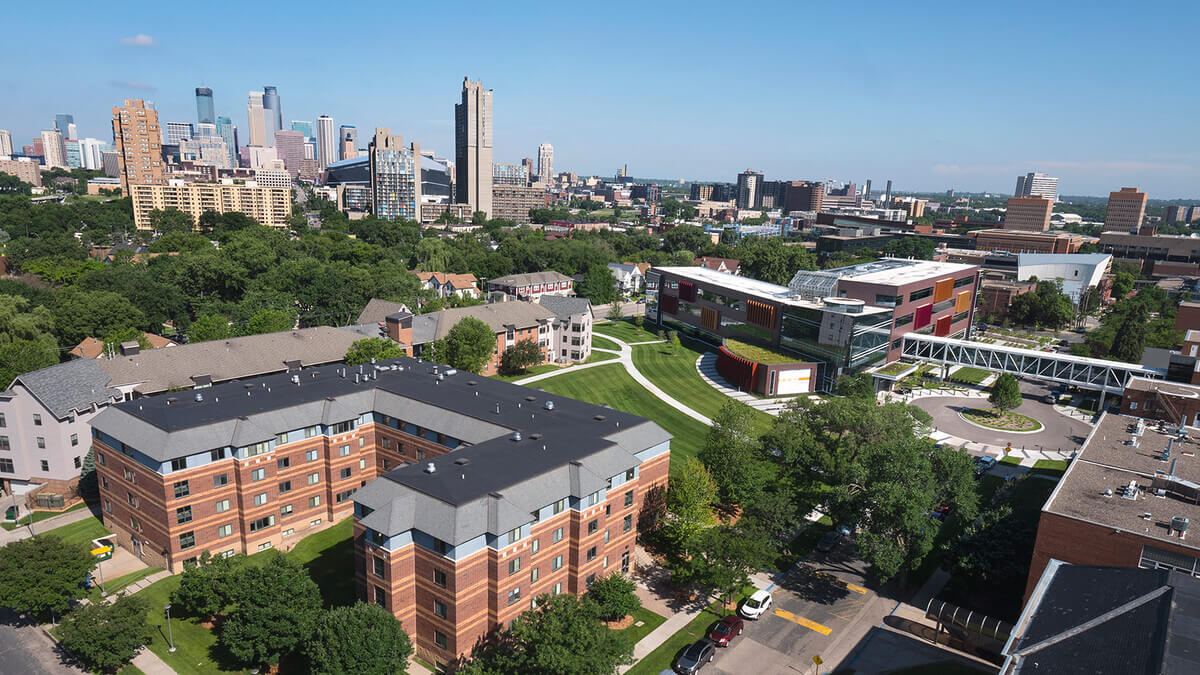
Augsburg University, a small liberal arts college in the heart of Minneapolis, punches above its weight with an urban-engaged curriculum and a commitment to social justice. Known for its tight-knit community and hands-on learning, Augsburg attracts students who want professors who know their names and a campus that feels like home—despite its location in a major city. While its graduation rates lag behind national averages, its strong employment outcomes (89% employed or in grad school within 18 months) suggest students who stick it out land on their feet.
Admissions
Augsburg is decidedly not a selective school, with Acceptance rateThe share of applicants a college admits in a given year. A 10% acceptance rate means it admits about 1 in 10 applicants. hovering between 67-82% depending on the year. The middle 50% of admitted students have SAT scores between 1203–1325, though the university is Test-optionalA policy where you choose whether to submit SAT or ACT scores. If you don't, the rest of your application carries more weight.. There's no early decision or early action—just a rolling admissions process with a soft deadline of August 1. Notably, Augsburg doesn't publish its average high school GPA for admitted students, suggesting academics aren't the sole focus here.
Academics
Augsburg offers a classic liberal arts curriculum with some standout programs:
Sources
- Institutional Research & Reports – Office of Planning and Effectiveness
- Fast Facts - About Augsburg University
- Augsburg University Overview - CollegeData
- Common Data Set: Home
- Augsburg University - IPEDS - Department of Education
- Common Data Set - Institutional Research
- Augsburg University Admissions - BigFuture College Search
- Augsburg University Admissions - US News Best Colleges
- Augsburg College SAT Scores and GPA
- Augsburg University (AC) - The Princeton Review College Rankings ...
- Augsburg University Acceptance Rate - CollegeData