Acceptance rateThe share of applicants a college admits in a given year. A 10% acceptance rate means it admits about 1 in 10 applicants.
44%
Undergrad enrollment
7,468
Net priceWhat a family actually pays after grants and scholarships are subtracted from the sticker price — usually far less than the published cost.
$49,465
In-state tuition
$52,040
Out-of-state tuition
$52,040
Acceptance Rate
44%
Most Popular Majors
Performing Arts (80%), Computer/Info Sciences (14%)
Application Deadline
January 15
International Students
25%
Student-to-Faculty Ratio
Low (exact ratio not specified in sources)
Avg. Financial Aid Package
$34,092
Median Early-Career Earnings
$36,427
Music Industry Employment Rate
Quick answers
What is the acceptance rate at Berklee College of Music?
Berklee College of Music's acceptance rate is approximately 44% (Boston, MA), based on the most recent figures we compiled from public and primary sources.
How much does Berklee College of Music cost?
At Berklee College of Music, the average net price (after aid) is about $49,465 per year. Actual cost varies with financial aid and residency.
How many undergraduates attend Berklee College of Music?
Berklee College of Music enrolls approximately 7,468 undergraduate students.
Where is Berklee College of Music located?
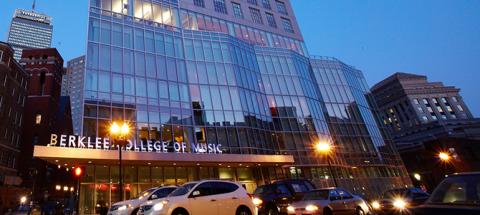
Berklee College of Music is located in Boston, MA.
Berklee College of Music isn't just a school—it's a global music industry incubator. With a fiercely competitive admissions process (44% acceptance rate) and a curriculum laser-focused on contemporary music, Berklee attracts prodigies and pragmatists alike. Its Boston campus thrums with 24/7 creativity, where jazz improvisation bleeds into electronic production labs and songwriting workshops. While early-career earnings lag behind traditional colleges (median $36,427), over half of graduates build careers in music—a testament to its unrivaled industry connections and genre-defying pedagogy.
Admissions
Getting into Berklee requires more than talent—it demands demonstrable musical chops. With a 44% Acceptance rateThe share of applicants a college admits in a given year. A 10% acceptance rate means it admits about 1 in 10 applicants. (per U.S. News) and January 15 deadlines, applicants face rigorous live auditions and interviews that assess technical proficiency and creative potential. Notably, Berklee is Test-optionalA policy where you choose whether to submit SAT or ACT scores. If you don't, the rest of your application carries more weight., prioritizing musical portfolios over SAT scores. The gender breakdown reveals slightly higher acceptance rates for women (40% vs. male applicants), though both genders submit nearly equal application volumes (~3,700 each).
Berklee's curriculum reads like a music industry blueprint: 15 Bachelor of Music majors spanning Film Scoring, Music Therapy, and Electronic Production. The program's crown jewel is its jazz and contemporary music theory—Reddit threads praise its harmony classes as 'the best for pop and jazz theory.' With a low student-to-faculty ratio and 34 principal instruments offered, instruction is intensely personalized. The most popular majors cluster in performing arts (80% of students) and computer/information sciences (14%), reflecting Berklee's dual emphasis on artistry and technology.
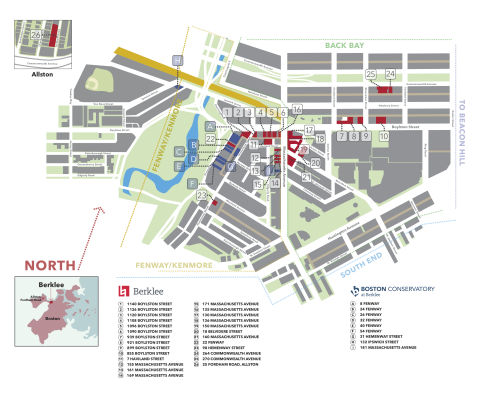
The campus hums with creative collisions—a jazz drummer jams with a film scorer in the 160 Massachusetts Ave dorm, while electronic producers tweak beats in the 24-hour labs. Instagram showcases virtual socials where 'Fall 26' students connect over games and impromptu jam sessions. Reddit users emphasize that peers become your professional network: 'For niche majors like Songwriting, your classmates are your primary source of value.' With 25% international students, the community thrives on stylistic cross-pollination—Balkan folk meets hip-hop beatmaking in practice rooms.
Berklee's ROI is measured in industry access, not starting salaries. While median earnings one year post-graduation sit at $36,427 (below national averages), 52% of alumni derive most income from music—a staggering rate for the arts. Six-year graduation rates hover around 70%, though retention dips after freshman year as some students pivot to professional opportunities. The mobility report card shows Berklee outperforms peer institutions in propelling students from lower-income brackets into creative careers.
At $48,608 Net priceWhat a family actually pays after grants and scholarships are subtracted from the sticker price — usually far less than the published cost. (after average aid), Berklee isn't cheap—but 84% of students receive financial assistance. The aid package average ($34,092) includes merit scholarships that reward audition performance as much as financial need. Cost-saving options include dual enrollment at Berklee's Valencia campus. Notably, the net price calculator reveals stark disparities: upper-income families often pay full freight, while Pell-eligible students may access grants covering 50%+ of costs.
Berklee operates like a music industry microcosm—its 'classrooms' are recording studios, and final exams are live performances at the Red Room at Cafe 939. Unlike conservatories fixated on classical repertoire, Berklee's pedagogy embraces TikTok trends and AI music tools alongside bebop. Its alumni network includes Quincy Jones and Esperanza Spalding, creating a self-perpetuating ecosystem where grads hire current students for sessions and tours. For those willing to gamble on a creative career, it offers something no Ivy can: direct pipelines to the stages and studios where music history is made.
Berklee College of Music logo · sourceBoston Campus | Berklee College of Music · sourceBerklee College of Music 360 Campus Tour | Berklee · sourceBoston Campus Map | Berklee College of Music · source
.jpg?width=1600)