Acceptance rateThe share of applicants a college admits in a given year. A 10% acceptance rate means it admits about 1 in 10 applicants.
4%
SAT 25th-75th percentileThe middle range of SAT scores for admitted students: a quarter scored below the low number and a quarter scored above the high number.
1510–1580
Undergrad enrollment
8,973
Net priceWhat a family actually pays after grants and scholarships are subtracted from the sticker price — usually far less than the published cost.
$21,590
In-state tuition
$71,845
Out-of-state tuition
$71,845
Middle 50% ACT
34–36
Middle 50% SAT
1510–1560
Acceptance Rate
3.9%
Undergrad Enrollment
9,111
Net Price (After Aid)
$21,590
Student Organizations
400+
6-Year Graduation Rate
93%
International Students
Quick answers
What is the acceptance rate at Columbia University in the City of New York?
Columbia University in the City of New York's acceptance rate is approximately 4% (New York, NY), based on the most recent figures we compiled from public and primary sources.
What SAT score do you need for Columbia University in the City of New York?
Admitted students at Columbia University in the City of New York typically score 1510–1580 on the SAT (the middle-50% range). Scores outside this band are still admitted, especially with strong applications.
How much does Columbia University in the City of New York cost?
At Columbia University in the City of New York, the average net price (after aid) is about $21,590 per year. Actual cost varies with financial aid and residency.
How many undergraduates attend Columbia University in the City of New York?
Columbia University in the City of New York enrolls approximately 8,973 undergraduate students.
Where is Columbia University in the City of New York located?
Columbia University in the City of New York is located in New York, NY.
Columbia University isn't just an Ivy League institution—it's a New York City powerhouse where intellectual rigor meets urban energy. With a brutal 3.9% acceptance rate and SAT scores rivaling NASA astronaut requirements, Columbia attracts polymaths who thrive in its Core Curriculum while leveraging unparalleled access to Manhattan's cultural and professional resources. Graduates command median earnings of $102,491 within a decade, validating its status as a launchpad for global leaders.
Admissions
Columbia's admissions process is among the most selective in higher education, with a 3.9% acceptance rate for the Class of 2028. The middle 50% SAT range for admitted students is 1510–1560, while ACT scores cluster between 34–36—placing Columbia in the 99th percentile of test-takers nationwide. Notably, the university maintains a Test-optionalA policy where you choose whether to submit SAT or ACT scores. If you don't, the rest of your application carries more weight. policy, though submitted scores remain a significant factor. Early Decision applicants face slightly better odds at 12.5%, but still contend with a pool where 93% of admitted students graduated in the top 10% of their high school class. Columbia emphasizes intellectual vitality through its Holistic admissionsA review that weighs the whole applicant — grades, essays, activities, and context — rather than relying on test scores and GPA alone., weighing academic achievements (rigor of coursework, GPA), extracurricular impact, and personal essays equally.
Columbia's academic identity orbits around two gravitational forces: the Core Curriculum—a century-old sequence of literature, philosophy, and science courses required for all undergraduates—and its location-driven specializations. The most popular majors reflect this duality: computer science (leveraging NYC's tech scene), economics (Wall Street adjacency), and political science (UN headquarters access). Students must declare a major, with options ranging from Actuarial Science to accelerated legal education programs at Barnard College. The university's intellectual culture prizes interdisciplinary rigor, evident in joint-degree programs like the 3-2 Combined Plan with engineering. Unlike peer Ivies, Columbia mandates language proficiency (four semesters of a foreign language) and offers niche urban-focused concentrations like Sustainable Development.
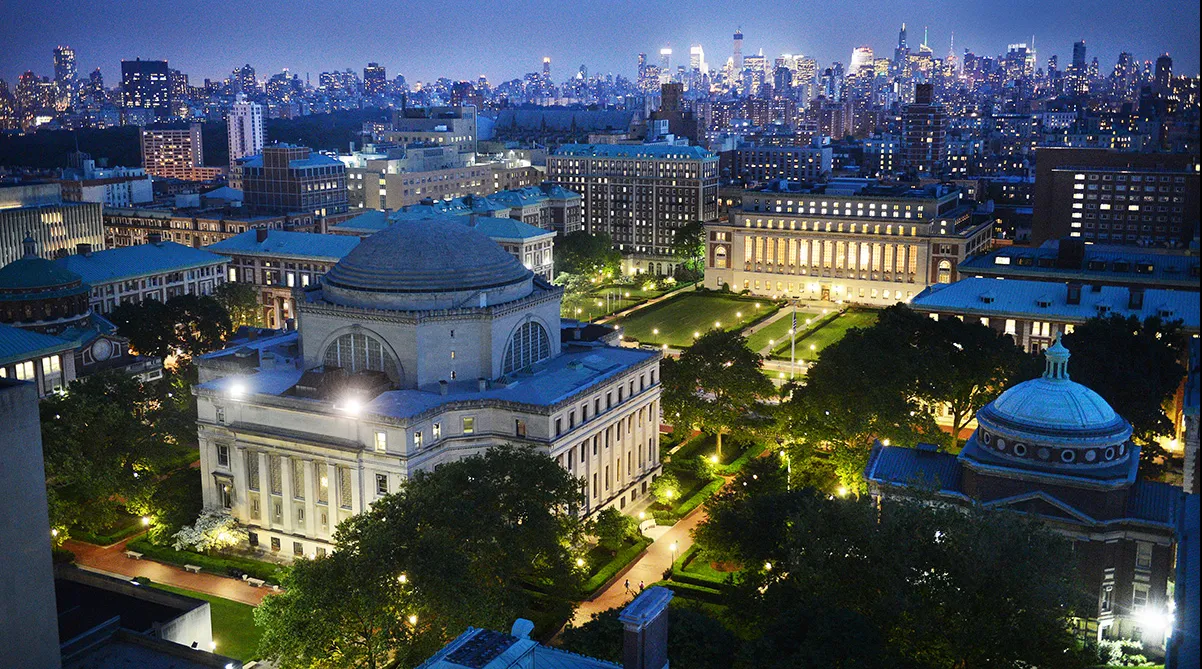
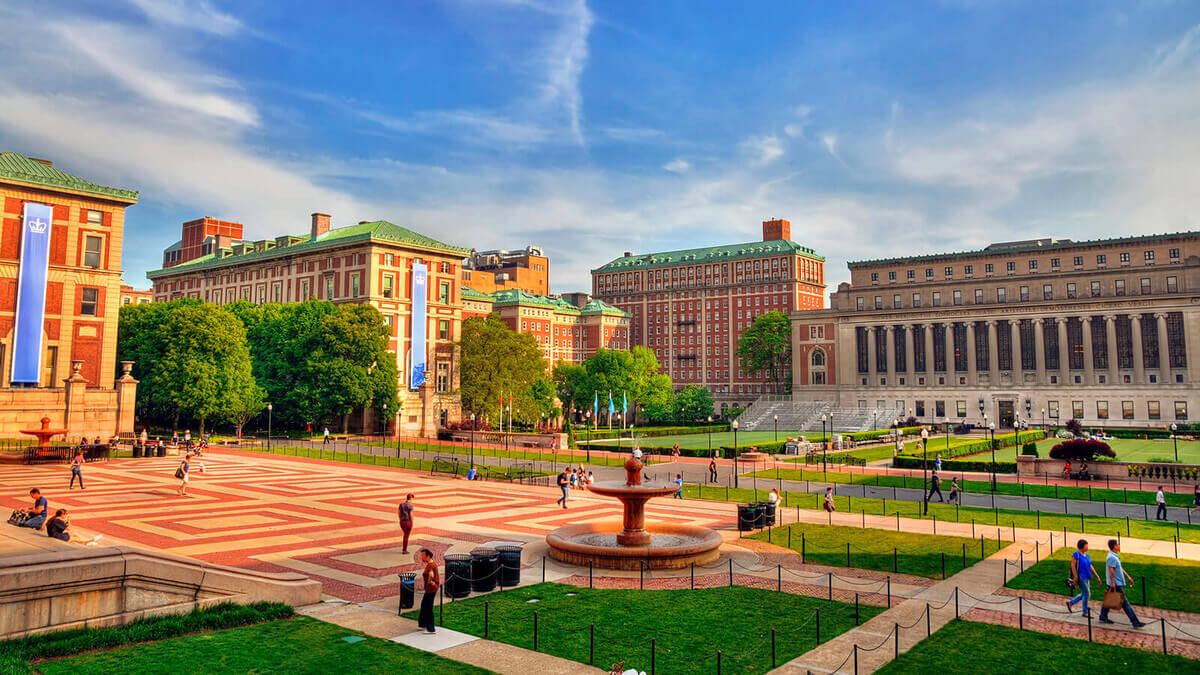
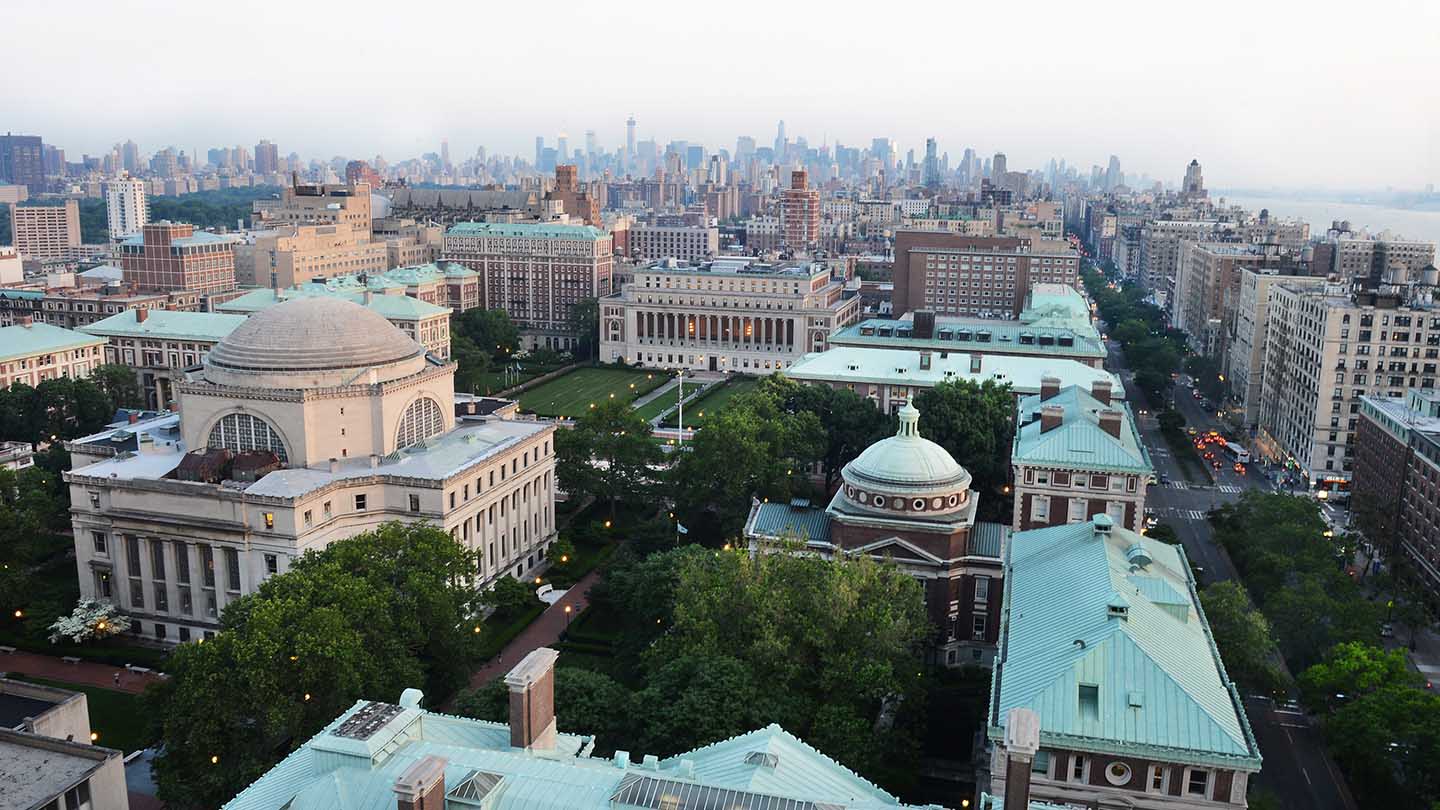
Life at Columbia unfolds on a tightly packed Morningside Heights campus that feels like a scholarly village amid Manhattan's chaos. The university's 400+ student organizations range from the Columbia Daily Spectator (the nation's second-oldest college paper) to niche clubs like the Urban Farmers. A defining quirk: the Orgo Night tradition, where the marching band storms the library at midnight before Organic Chemistry finals. While dorms are notoriously cramped (70% of undergrads live on campus), students trade square footage for instant NYC access—the 1 train whisks them to internships at Goldman Sachs or MoMA visits in 15 minutes. International students (comprising 15% of undergrads) often cite cultural adjustment challenges, mitigated by programs like the International Students and Scholars Office workshops.
Columbia's 93% six-year graduation rate (87% in four years) outpaces national averages by 34 percentage points, with alumni earning $78,000 early-career salaries—$14K above typical Ivy benchmarks. Ten years post-graduation, median earnings skyrocket to $102,491, eclipsing NYU peers by $20K. The university's career ecosystem thrives on NYC integration: 70% complete internships at Fortune 500s or UN agencies, while the Center for Career Education logs 12,000+ annual employer contacts. Notably, Columbia engineers see 98% job placement within six months, often at Bloomberg LP or NASA. For entrepreneurs, the Columbia Startup Lab provides free coworking space in SoHo—a rarity in university-sponsored programs.
With a $21,590 average net cost after aid (49% of students receive assistance), Columbia practices need-blind admissions while meeting 100% of demonstrated need. The average first-year grant totals $77,908, with no-loan policies for families earning under $150K. Notably, 20% of undergrads pay $0 tuition due to combination of grants and work-study. The financial aid office runs three estimation tools (including a Net priceWhat a family actually pays after grants and scholarships are subtracted from the sticker price — usually far less than the published cost. Calculator) to project costs—critical given Manhattan's high living expenses ($18,432 estimated room/board). Merit scholarships are scarce (only 5% of aid), reinforcing Columbia's focus on socioeconomic diversity through initiatives like the Opportunity Programs for First-generation (first-gen)A student who would be the first in their immediate family to earn a four-year college degree. Many colleges consider this in context. students.
Columbia's synergy with NYC creates an academic experience unmatched by rural Ivies—where else can economics students analyze Fed policy by day and network at Wall Street mixers by night? The Core Curriculum forces STEM majors to engage with Plato and artists to debate quantum theory, producing graduates who can converse across disciplines. Its global alumni network (including 3 US Presidents and 96 Nobel laureates) opens doors from Zurich to Singapore, while the Columbia World Projects initiative tackles real-world challenges like climate migration. For students who crave intensity—whether debating Kierkegaard in a 300-year-old seminar room or sprinting to a Broadway audition between classes—Columbia delivers an education that's as relentless and electrifying as the city itself.
Columbia University in the City of New York logo · sourceColumbia and New York | Columbia University in the City of New York · sourceColumbia University in the City of New York - New York, NY | Appily · sourceColumbia University Campus | Columbia Engineering · source