Loading…
← All schools
Dickinson State University
Dickinson, NDpublicwww.dickinsonstate.edu/
- Acceptance rateThe share of applicants a college admits in a given year. A 10% acceptance rate means it admits about 1 in 10 applicants.
- 37%
- Undergrad enrollment
- 1,090
- Net priceWhat a family actually pays after grants and scholarships are subtracted from the sticker price — usually far less than the published cost.
- $14,092
- In-state tuition
- $9,118
- Out-of-state tuition
- $9,118
- Type
- Public
- Avg ACT
- 17–22
- Avg SAT
- 980–1090
- Location
- Dickinson, ND
- Acceptance Rate
- 37%-99.7% (varies by residency)
- Graduation Rate
- 51%
- Tuition (In-State)
- $9,118
- Undergrad Enrollment
- ~1,400
- Student-Faculty Ratio
Quick answers
- What is the acceptance rate at Dickinson State University?
- Dickinson State University's acceptance rate is approximately 37% (Dickinson, ND), based on the most recent figures we compiled from public and primary sources.
- How much does Dickinson State University cost?
- At Dickinson State University, the average net price (after aid) is about $14,092 per year. Actual cost varies with financial aid and residency.
- How many undergraduates attend Dickinson State University?
- Dickinson State University enrolls approximately 1,090 undergraduate students.
- Where is Dickinson State University located?
- Dickinson State University is located in Dickinson, ND.
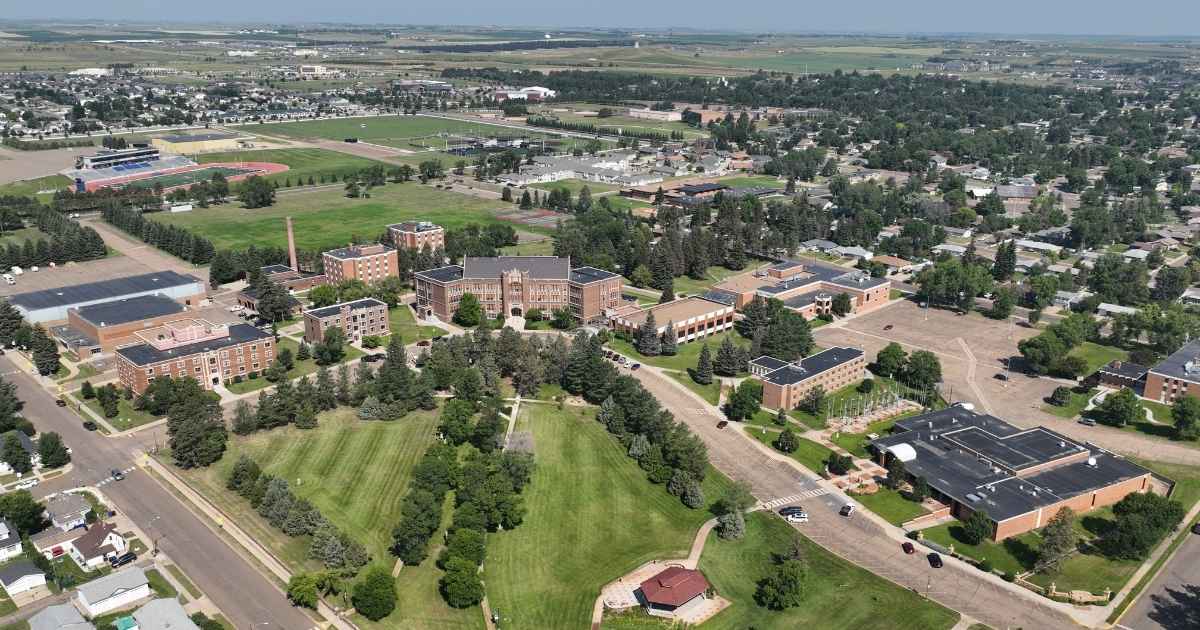
Dickinson State University, a small public institution in western North Dakota, offers a pragmatic, career-focused education with an unusually open admissions policy—accepting nearly all applicants—and a scrappy, community-oriented campus culture. Known for its hands-on programs in education, business, and agriculture, DSU serves a largely local student body with affordable tuition and a 51% graduation rate, though retention struggles hint at the challenges of its rural setting.
Admissions
Dickinson State's admissions policy is among the most accessible in the U.S., with reported Acceptance rateThe share of applicants a college admits in a given year. A 10% acceptance rate means it admits about 1 in 10 applicants. ranging from 37% to 99.7% depending on the year and applicant pool—a discrepancy likely explained by its open admission policy for in-state students but selective consideration for out-of-state applicants and certain programs. Test scores (ACT 17–22, SAT 980–1090) are optional for associate and certificate programs but may be used for course placement. The university accepts the Common Application, though its low selectivity means most applicants with a high school diploma or GED can expect admission.
Sources
- Programs and Degrees - Dickinson State University
- Dickinson State University Academics - U.S. News & World Report
- English and Writing - Dickinson State University
- Dickinson State University | Dickinson, ND
- Dickinson State University - Niche
- Dickinson State first to test reduced-credit bachelor's degree
- [PDF] Common Data Set 2025-2026 | Dickinson College
- Dickinson State University - DFR Report HTML
- Common Data Set: Home
- Common Data Set Repository - College Transitions