Loading…
← All schools
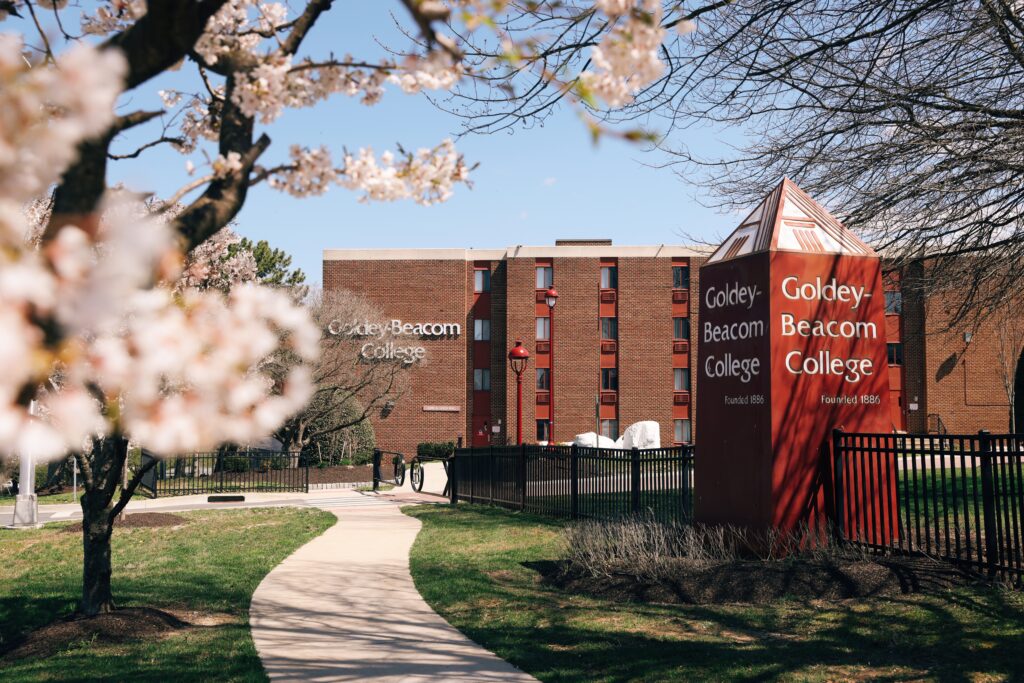
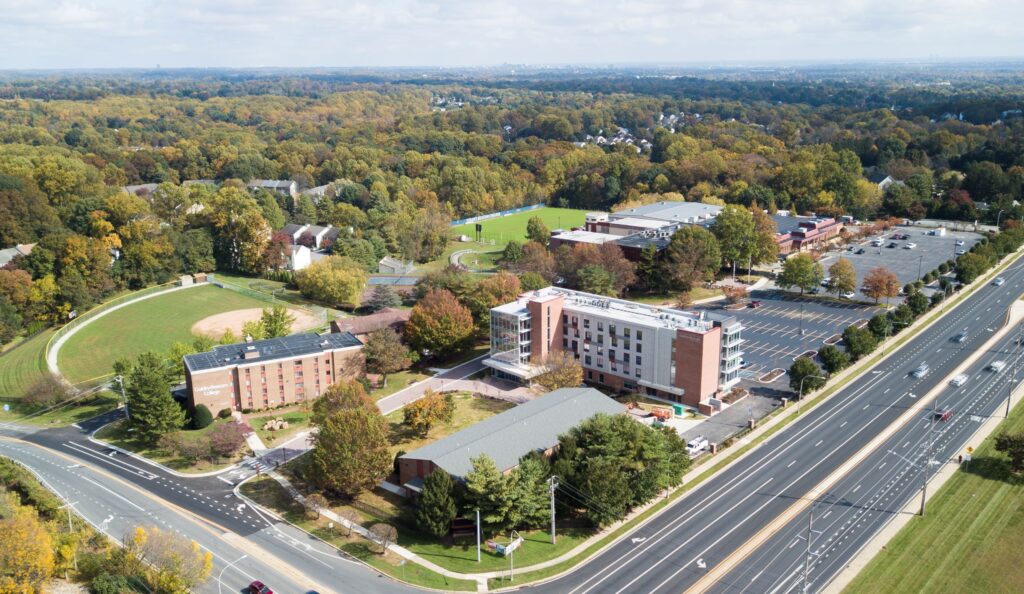
Goldey-Beacom College
Wilmington, DEprivate nonprofitwww.gbc.edu/
- Acceptance rateThe share of applicants a college admits in a given year. A 10% acceptance rate means it admits about 1 in 10 applicants.
- 85%
- Undergrad enrollment
- 691
- Net priceWhat a family actually pays after grants and scholarships are subtracted from the sticker price — usually far less than the published cost.
- $15,554
- In-state tuition
- $14,940
- Out-of-state tuition
- $14,940
- Avg GPA
- 3.2
- Avg SAT
- 860-1070
- Net Price
- $17,417
- Top Majors
- Business Admin (26%), Accounting (15%), Sports Management (12%)
- Acceptance Rate
- 55-85% (varies by source)
- Graduation Rate
- 59%
- On-Campus Housing
- 35% of students
- Early-Career Salary
- $37,675
Quick answers
- What is the acceptance rate at Goldey-Beacom College?
- Goldey-Beacom College's acceptance rate is approximately 85% (Wilmington, DE), based on the most recent figures we compiled from public and primary sources.
- How much does Goldey-Beacom College cost?
- At Goldey-Beacom College, the average net price (after aid) is about $15,554 per year. Actual cost varies with financial aid and residency.
- How many undergraduates attend Goldey-Beacom College?
- Goldey-Beacom College enrolls approximately 691 undergraduate students.
- Where is Goldey-Beacom College located?
- Goldey-Beacom College is located in Wilmington, DE.
Goldey-Beacom College is a small, career-focused business school in Wilmington, Delaware, where practicality trumps prestige. With acceptance rates hovering between 55-85% depending on the source, it's accessible to students with middling GPAs (average 3.2) and SAT scores (860-1070), but delivers solid ROI—59% graduation rates and $37,675 average early-career salaries. The vibe is commuter-heavy (65% live off-campus) and no-frills, with programs laser-targeted at accounting, business admin, and sports management.
Admissions
Goldey-Beacom's admissions process leans heavily toward accessibility over selectivity. Acceptance rateThe share of applicants a college admits in a given year. A 10% acceptance rate means it admits about 1 in 10 applicants. vary wildly by source—from 55.21% (CollegeBoard) to 85% (U.S. News)—but consistently reflect a non-competitive process where most applicants with a pulse get in. The middle 50% of admitted students have SAT scores between 860-1070 and ACT scores of 15-17, well below national averages. GPAs are similarly modest: only 18% of enrollees had a 3.75+ GPA, while 15% were admitted with GPAs between 3.25-3.49. Notably, the school encourages but doesn't require SAT/ACT submissions, making it an option for standardized test-averse students. Rolling admissions mean there's no hard deadline, though financial aid applications are due July 19.
Sources
- Office of Institutional Effectiveness - Goldey-Beacom College
- Common Data Set: Home
- [PDF] Common Data Set 2025-2026
- Common Data Set | Office of Institutional Research - Brown University
- The Common Data Set: What It Is & How to Use It In College ...
- What is the Common Data Set? | College Raptor
- Goldey-Beacom College Admissions - U.S. News & World Report
- Goldey-Beacom College Admissions - BigFuture
- Goldey-Beacom College - Tuition and Acceptance Rate
- Goldey-Beacom College Requirements for Admission - PrepScholar
.jpg)