Loading…
← All schools
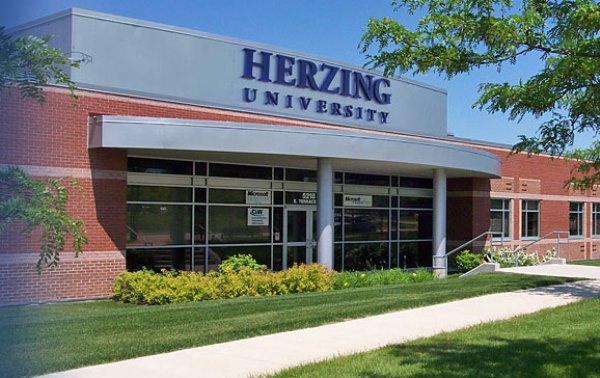
Herzing University-Madison
Madison, WIprivate nonprofitherzing.edu
- Acceptance rateThe share of applicants a college admits in a given year. A 10% acceptance rate means it admits about 1 in 10 applicants.
- 94%
- Undergrad enrollment
- 2,494
- Net priceWhat a family actually pays after grants and scholarships are subtracted from the sticker price — usually far less than the published cost.
- $22,327
- In-state tuition
- $13,450
- Out-of-state tuition
- $13,450
- Student Body
- Predominantly non-traditional
- Top Programs
- Nursing, Surgical Technology
- Avg. Net Price
- $20,679
- Acceptance Rate
- 94.15%
- 6-Year Grad Rate
- 50%
- Pell Grant Recipients
- 67%
- Median Grad Earnings (10yr)
- $36,909
Quick answers
- What is the acceptance rate at Herzing University-Madison?
- Herzing University-Madison's acceptance rate is approximately 94% (Madison, WI), based on the most recent figures we compiled from public and primary sources.
- How much does Herzing University-Madison cost?
- At Herzing University-Madison, the average net price (after aid) is about $22,327 per year. Actual cost varies with financial aid and residency.
- How many undergraduates attend Herzing University-Madison?
- Herzing University-Madison enrolls approximately 2,494 undergraduate students.
- Where is Herzing University-Madison located?
- Herzing University-Madison is located in Madison, WI.
Herzing University-Madison is a career-focused institution with a near-open admissions policy (94% acceptance rate) and a pragmatic approach to education, particularly in nursing and healthcare fields. Its flexible programs cater heavily to non-traditional students balancing work and school, though graduation rates lag behind national averages. The university's strongest selling point is its direct pipeline to healthcare careers, with some programs like Surgical Technology boasting 87.5% graduate placement rates.
Admissions
Herzing-Madison operates with near-open admissions, accepting 94.15% of applicants according to College Board data—one of the highest rates among accredited institutions. With 2,521 students enrolled from just 596 applications (per Peterson's), the school clearly prioritizes access over selectivity. No minimum GPA or test scores are published, aligning with its mission to serve career-changers and working adults. Notably, the Common Data Set (CDS)A standardized report most colleges publish each year with admissions, test-score, and financial-aid figures, making schools easier to compare. framework suggests this open-door policy extends to GED holders, though Herzing's specific CDS isn't publicly available.
Academics
The Madison campus leans heavily into healthcare training, with nursing programs (including an Associate of Science in Surgical Technology with an 87.5% graduate placement rate) dominating its offerings. Degrees range from diplomas to graduate programs, delivered through hybrid formats catering to working adults. A Reddit thread critiqued the low 78% board pass rate for its Florida nursing program, suggesting variability in outcomes by location. The curriculum is narrowly career-focused—Niche lists Business and Health Professions as top majors, with minimal humanities offerings.
Sources
- Common Data Set: Home
- Institutional Reporting | Emory University | Atlanta GA
- How To Use a Common Data Set - The College Solution
- [PDF] Common Data Set 2024-2025 - A. General Information - Georgia Tech
- Common Data Set - Data, Academic Planning & Institutional Research
- Common Data Set - ccmrwithmsthrash
- Herzing University: Madison Admissions - BigFuture College Search
- Herzing University, Madison - Tuition and Acceptance Rate
- Herzing University-Atlanta Admissions - US News Best Colleges
- Herzing University-Nashville Acceptance Rate and SAT/ACT Scores