Loading…
← All schools
Mirrer Yeshiva Cent Institute
Brooklyn, NYprivate nonprofitwww.mirreryeshiva.co/
- Acceptance rateThe share of applicants a college admits in a given year. A 10% acceptance rate means it admits about 1 in 10 applicants.
- 89%
- Undergrad enrollment
- 120
- Net priceWhat a family actually pays after grants and scholarships are subtracted from the sticker price — usually far less than the published cost.
- $10,728
- In-state tuition
- $13,600
- Out-of-state tuition
- $13,600
- Focus
- Talmudic/Rabbinic Studies
- Founded
- 1814 (Poland), reestablished 1947 (USA)
- Location
- Brooklyn, NY (Borough Park)
- Student Body
- Orthodox Jewish males
- Retention Rate
- 96%
- Acceptance Rate
- 77-89% (varies by source)
- Graduation Rate
- 5-25%
- Median Earnings (5 yrs)
- $45,519
Quick answers
- What is the acceptance rate at Mirrer Yeshiva Cent Institute?
- Mirrer Yeshiva Cent Institute's acceptance rate is approximately 89% (Brooklyn, NY), based on the most recent figures we compiled from public and primary sources.
- How much does Mirrer Yeshiva Cent Institute cost?
- At Mirrer Yeshiva Cent Institute, the average net price (after aid) is about $10,728 per year. Actual cost varies with financial aid and residency.
- How many undergraduates attend Mirrer Yeshiva Cent Institute?
- Mirrer Yeshiva Cent Institute enrolls approximately 120 undergraduate students.
- Where is Mirrer Yeshiva Cent Institute located?
- Mirrer Yeshiva Cent Institute is located in Brooklyn, NY.
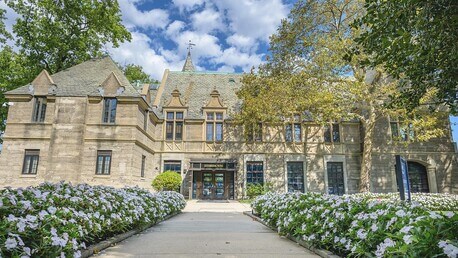
Mirrer Yeshiva Cent Institute is a deeply traditional Orthodox Jewish yeshiva in Brooklyn, NY, with roots tracing back to 19th-century Poland. Known for its rigorous Talmudic studies and tight-knit religious community, it attracts students committed to Orthodox Jewish scholarship, with acceptance rates varying widely by source (77%-89%) and a strikingly high retention rate (96%) despite modest graduation rates.
Admissions
Mirrer Yeshiva's admissions process reflects its niche as an Orthodox Jewish institution, with Acceptance rateThe share of applicants a college admits in a given year. A 10% acceptance rate means it admits about 1 in 10 applicants. reported between 77% (MyLiaison) and 89% (Niche). Sources disagree on selectivity—CollegeFactual notes 78%, while Peterson's reports 50 acceptances from 56 applicants (89%). Notably, retention rates are high at 74-96% (MyLiaison, Varsity Tutors), suggesting strong student commitment despite relaxed initial selectivity. The yeshiva does not appear to emphasize standardized testing (no SAT/ACT data available in sources).
Sources
- Common Data Set: Home
- [PDF] common-data-set-current-year.pdf - Saint Vincent College
- [PDF] COMMON DATA SET - Widener University
- How To Use a Common Data Set - The College Solution
- Demystifying the Common Data Set - Top Tier Admissions
- [PDF] Common Data Set 2019-2020 - Institutional Research - CUNY
- Mirrer Yeshiva Central Institute - MyLiaison
- Mirrer Yeshiva Central Institute - Tuition and Acceptance Rate
- Mirrer Yeshiva Cent Institute Tuition, Acceptance Rate, & Academics
- Mirrer Yeshiva Cent Institute Admissions & Acceptance - Niche