Loading…
← All schools
The Catholic University of America
Washington, DCprivate nonprofitcatholic.edu
- Acceptance rateThe share of applicants a college admits in a given year. A 10% acceptance rate means it admits about 1 in 10 applicants.
- 83%
- Undergrad enrollment
- 3,154
- Net priceWhat a family actually pays after grants and scholarships are subtracted from the sticker price — usually far less than the published cost.
- $29,561
- In-state tuition
- $58,378
- Out-of-state tuition
- $58,378
- Location
- Washington, DC (residential campus)
- Avg. Net Price
- $31,868
- Campus Housing
- 61% of students
- SAT Middle 50%
- 1040-1240
- Acceptance Rate
- 83%
- Notable Programs
- Law, Business, Theology, Engineering
- Undergrad Programs
- 250+
- 4-Year Graduation Rate
- 73%
Quick answers
- What is the acceptance rate at The Catholic University of America?
- The Catholic University of America's acceptance rate is approximately 83% (Washington, DC), based on the most recent figures we compiled from public and primary sources.
- How much does The Catholic University of America cost?
- At The Catholic University of America, the average net price (after aid) is about $29,561 per year. Actual cost varies with financial aid and residency.
- How many undergraduates attend The Catholic University of America?
- The Catholic University of America enrolls approximately 3,154 undergraduate students.
- Where is The Catholic University of America located?
- The Catholic University of America is located in Washington, DC.
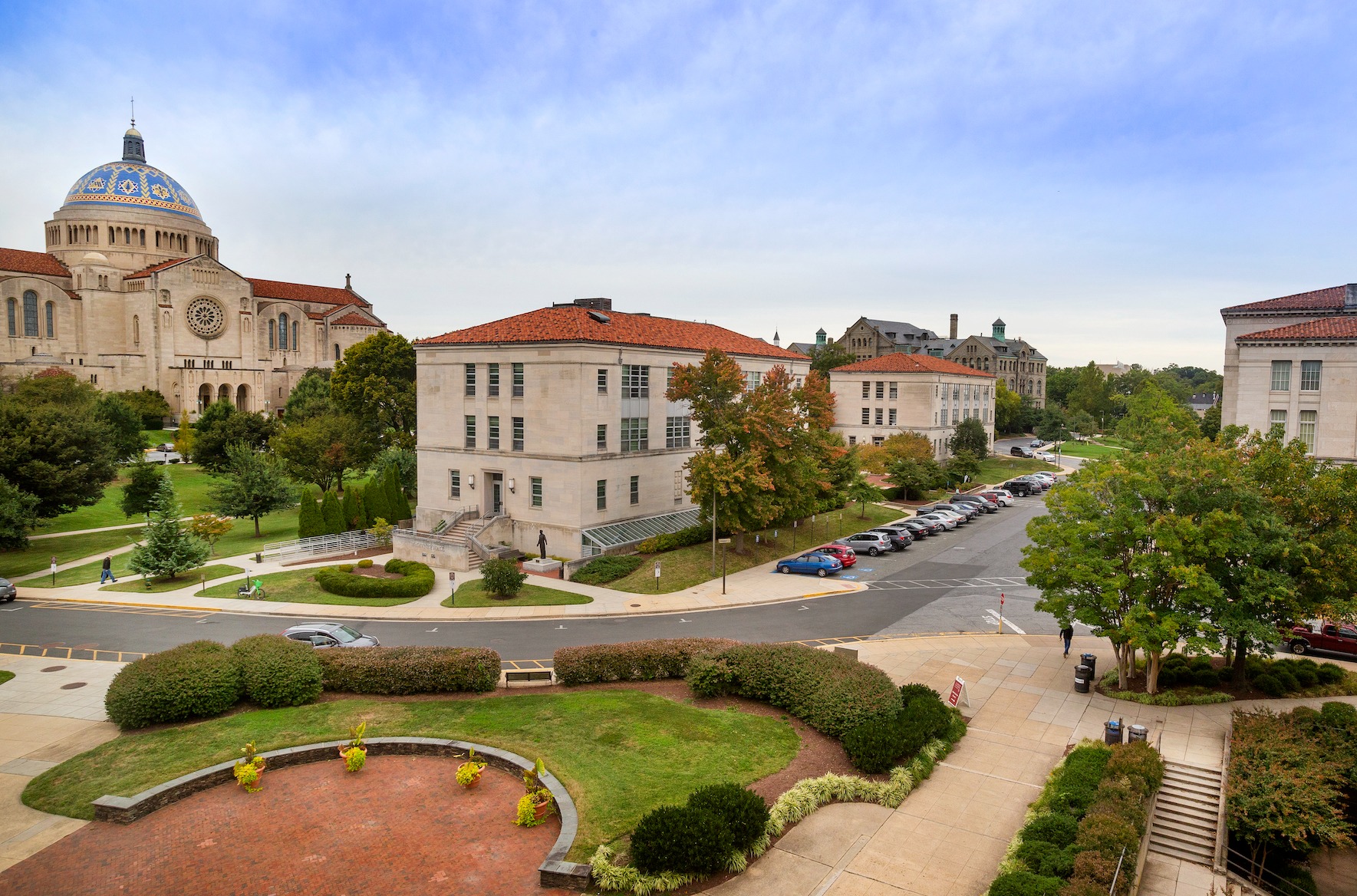
The Catholic University of America blends rigorous academics with a deeply rooted Catholic identity, offering over 250 programs in a leafy, gothic campus just minutes from DC's power centers. With an 83% acceptance rate and strong outcomes in law, business, and engineering, it attracts students seeking faith-infused learning alongside professional ambition. The university's $44,000 average financial aid package makes its $60K+ sticker price more accessible than it appears.
Admissions
Catholic University maintains an 83% acceptance rate, making it accessible to most applicants while still requiring solid academic credentials. The middle 50% of admitted students score between 1040-1240 on the SAT or 20-26 on the ACT—suggesting the university values mission fit over ultra-selectivity. Applications are due February 1 for regular decision, with no mention of Early Action or Early Decision in the provided sources. Notably, 61% of first-year students receive need-based aid, averaging $44,016 per recipient—a significant draw for families eyeing the $60,416 tuition.
Sources
- Common Data Set | Washington, D.C. - Institutional Research
- The Catholic University of America - Institution Data Profile
- Facts and Dashboards | CUA - Institutional Research
- Catholic University of America Overview - CollegeData
- Common Data Set: Home
- Common Data Set Definitions | CUA - Institutional Research
- The Catholic University of America Admissions
- Catholic University of America Admissions - BigFuture College Search
- Catholic University of America SAT Scores and GPA
- Catholic University GPA, SAT and ACT Data - ThoughtCo