Loading…
← All schools
University of Alabama at Birmingham
Birmingham, ALpublicuab.edu
- Acceptance rateThe share of applicants a college admits in a given year. A 10% acceptance rate means it admits about 1 in 10 applicants.
- 88%
- SAT 25th-75th percentileThe middle range of SAT scores for admitted students: a quarter scored below the low number and a quarter scored above the high number.
- 1210–1450
- Undergrad enrollment
- 11,635
- Net priceWhat a family actually pays after grants and scholarships are subtracted from the sticker price — usually far less than the published cost.
- $18,749
- In-state tuition
- $9,098
- Out-of-state tuition
- $22,562
- Clubs & Orgs
- 400+
- Avg ACT Range
- 23–30
- Avg SAT Range
- 1190–1430
- Test-Optional
- Through 2026
- Acceptance Rate
- 88.4%
- Net Price (After Aid)
- $16,834
- Student-Faculty Ratio
- 19:1
- 6-Year Graduation Rate
Quick answers
- What is the acceptance rate at University of Alabama at Birmingham?
- University of Alabama at Birmingham's acceptance rate is approximately 88% (Birmingham, AL), based on the most recent figures we compiled from public and primary sources.
- What SAT score do you need for University of Alabama at Birmingham?
- Admitted students at University of Alabama at Birmingham typically score 1210–1450 on the SAT (the middle-50% range). Scores outside this band are still admitted, especially with strong applications.
- How much does University of Alabama at Birmingham cost?
- At University of Alabama at Birmingham, the average net price (after aid) is about $18,749 per year. Actual cost varies with financial aid and residency.
- How many undergraduates attend University of Alabama at Birmingham?
- University of Alabama at Birmingham enrolls approximately 11,635 undergraduate students.
- Where is University of Alabama at Birmingham located?
- University of Alabama at Birmingham is located in Birmingham, AL.
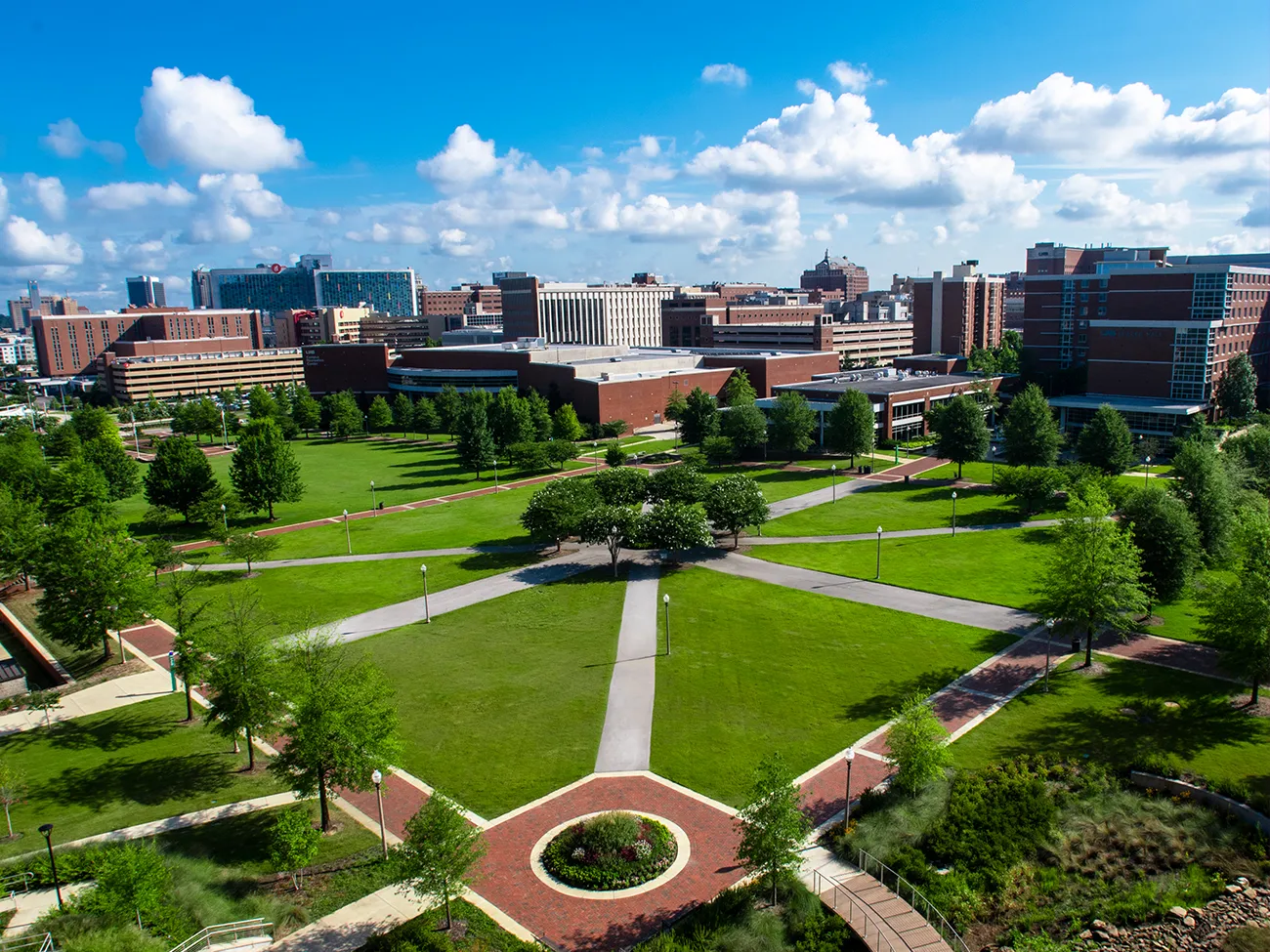
The University of Alabama at Birmingham (UAB) is a powerhouse in healthcare and research, blending the energy of a major urban campus with Southern charm. With an 88% acceptance rate and test-optional policy, it’s accessible yet rigorous, particularly in STEM fields. Students rave about the 400+ clubs and downtown Birmingham’s vibrant scene, while graduates land solid salaries—especially in healthcare—with a median earnings boost of $54,501 a decade out.
Admissions
UAB’s admissions process leans inclusive, with an 88.4% acceptance rate (2024 data), though enrolled students typically arrive with strong credentials: mid-50% SAT ranges of 1190–1430 and ACTs of 23–30. Over half of admitted students boast GPAs above 3.75. The school is test-optional through 2026, a policy that broadens access. Applications are due June 1, but rolling admissions mean earlier submissions may have an edge. Notably, UAB accepts the Common App, streamlining the process for multi-school applicants.
Sources
- Common Data Set | Institutional Effectiveness and Analysis
- [PDF] Common Data Set 2024-2025
- Common Data Set Initiative - Institutional Research & Analytics
- OIRA Public Reports - The University of Alabama
- [PDF] Common Data Elements: - The University of Alabama at Birmingham
- University of Alabama at Birmingham | US News Best Colleges
- University Of Alabama At Birmingham Admissions - BigFuture
- University of Alabama at Birmingham SAT Scores and GPA
- University of Alabama Admissions - BigFuture College Search
- Test-Optional Admission Policy