Acceptance rateThe share of applicants a college admits in a given year. A 10% acceptance rate means it admits about 1 in 10 applicants.
42%
Undergrad enrollment
32,253
Net priceWhat a family actually pays after grants and scholarships are subtracted from the sticker price — usually far less than the published cost.
$14,741
In-state tuition
$16,774
Out-of-state tuition
$50,974
Avg Net Price
$17,270
Notable Alumni
Ann Veneman (Former USDA Secretary), Martin Yan (Yan Can Cook)
Acceptance Rate
42%
4-Year Grad Rate
69%
Signature Programs
#1 Veterinary Medicine, Top 5 Agriculture, Sustainable Viticulture
Undergrad Enrollment
31,532
Student-Faculty Ratio
21:1
Median Early Career Salary
$36,427
Quick answers
What is the acceptance rate at University of California-Davis?
University of California-Davis's acceptance rate is approximately 42% (Davis, CA), based on the most recent figures we compiled from public and primary sources.
How much does University of California-Davis cost?
At University of California-Davis, the average net price (after aid) is about $14,741 per year. Actual cost varies with financial aid and residency.
How many undergraduates attend University of California-Davis?
University of California-Davis enrolls approximately 32,253 undergraduate students.
Where is University of California-Davis located?
University of California-Davis is located in Davis, CA.
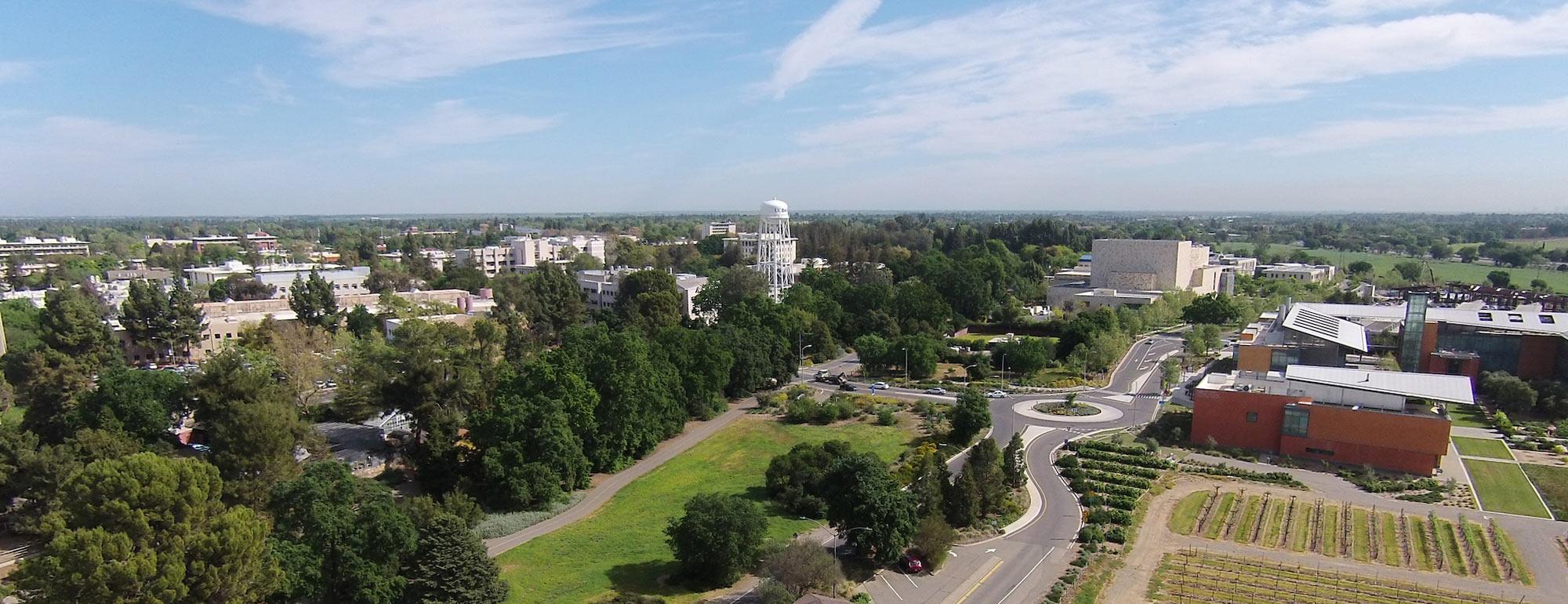
UC Davis is a powerhouse of agricultural and biological sciences with a laid-back, bike-friendly campus culture that balances rigorous academics with a distinctly Northern California vibe. Known for its veterinary medicine program (ranked #1 in the world) and sustainability initiatives, it attracts students who want top-tier STEM programs without the cutthroat intensity of some UC peers. The 5,300-acre campus—complete with its own airport and dairy—feels like a self-contained college town where students ride bikes to class past experimental vineyards.
Admissions
UC Davis admits about 42% of applicants, making it moderately selective among UC schools—more accessible than UCLA or Berkeley but more competitive than UC Riverside. For fall 2025, the middle 50% of admitted freshmen had SAT scores between 1230-1490 (610-710 EBRW, 620-780 Math) and ACT composites of 24-31, though test scores are no longer considered for admissions decisions as of 2024. The university received 102,988 applications last cycle, with in-state applicants facing slightly higher Acceptance rateThe share of applicants a college admits in a given year. A 10% acceptance rate means it admits about 1 in 10 applicants. than out-of-state students. Key factors include GPA (especially in UC-approved 'a-g' courses), personal insight questions, and extracurricular achievements—particularly in STEM or agriculture-related activities.
University of California-Davis: Acceptance Rate, SAT & Cost — AdmitQuant
Academics
With 102 majors spanning from Aerospace Science to Viticulture, UC Davis is strongest in agricultural sciences, veterinary medicine (its vet school is #1 globally), and biological sciences. The College of Agricultural and Environmental Sciences is a standout, offering unique programs like Brewing Science and Avian Sciences. Computer science, economics, and statistics are popular for their strong career outcomes, while the Design and English departments punch above their weight with niche strengths in sustainable architecture and creative writing.
Signature programs: World Food Center, Bodega Marine Laboratory, Robert Mondavi Institute for Wine and Food Science
Undergrad research: 40% of students participate in faculty-led research, often through the Undergraduate Research Center
Quirks: Students can take classes in beekeeping, organic farming, or even llama husbandry at the on-campus Student Farm
Davis cultivates an easygoing, academically serious vibe where students bike everywhere (the city has over 100 miles of bike paths) and unwind at the Arboretum or weekly Farmers Market. Unlike UC Santa Barbara or UCLA, Greek life is low-key (only 10% participation), and the social scene revolves around clubs, intramurals (including Quidditch teams), and traditions like Picnic Day—a 100+-year-old festival with a Doxie Derby (dachshund races) and chemistry magic shows.
Housing: 95% of freshmen live on campus in themed halls like 'Sustainability' or 'Arts & Humanities'
Foodie culture: The CoHo (Coffee House) serves student-grown produce, and the dining halls have vegan/vegetarian options galore
Student orgs: 800+ clubs including the famously quirky Davis Nerf Club and a student-run coffee shop
As one Redditor put it: 'People here are smart but not pretentious—you’ll see Nobel laureates lecturing in flip-flops.'
UC Davis graduates earn $36,427 median salary one year post-graduation, rising to $50,885 within a few years. The 4-year graduation rate is 69% (above the national average), while 86% finish within six years—a reflection of many STEM majors taking longer to complete requirements. Strong alumni networks exist in agriculture (Driscoll’s, Blue Diamond), tech (Intel, HP), and government (California EPA). About 22% of graduates pursue advanced degrees within five years, with particularly high med school Acceptance rateThe share of applicants a college admits in a given year. A 10% acceptance rate means it admits about 1 in 10 applicants. for biology majors.
The average net price is $17,270 after aid, though this varies sharply by income:
$9,211 for families earning <$30K
$17,270 average across all incomes
57% of undergrads receive need-based grants (not loans)
Merit scholarships are rare (only 7% of students), but the university meets 100% of demonstrated financial need for in-state students through Cal Grants and UC Blue & Gold Opportunities. Out-of-state students pay nearly triple the $14,402 in-state tuition, at $44,156 annually before aid.
UC Davis is the only UC with a fully operational airport and fire department, embodying its hands-on, problem-solving ethos. It’s a leader in sustainability (Gold-rated STARS campus) and animal sciences—students can intern at the on-campus dairy, equestrian center, or primate research facility. The blend of top-tier STEM programs with a collaborative, unpretentious culture makes it ideal for students who want rigorous academics without the cutthroat competition of Berkeley. As the saying goes: 'Cal studies the stars, Davis studies the dirt—and makes it revolutionary.'
University of California-Davis logo · sourceLocations | UC Davis · sourceGet to Know Campus When You Don't Live Nearby | UC Davis · sourceUniversity of California, Davis - Santa Monica College · source
.jpg?width=1600)